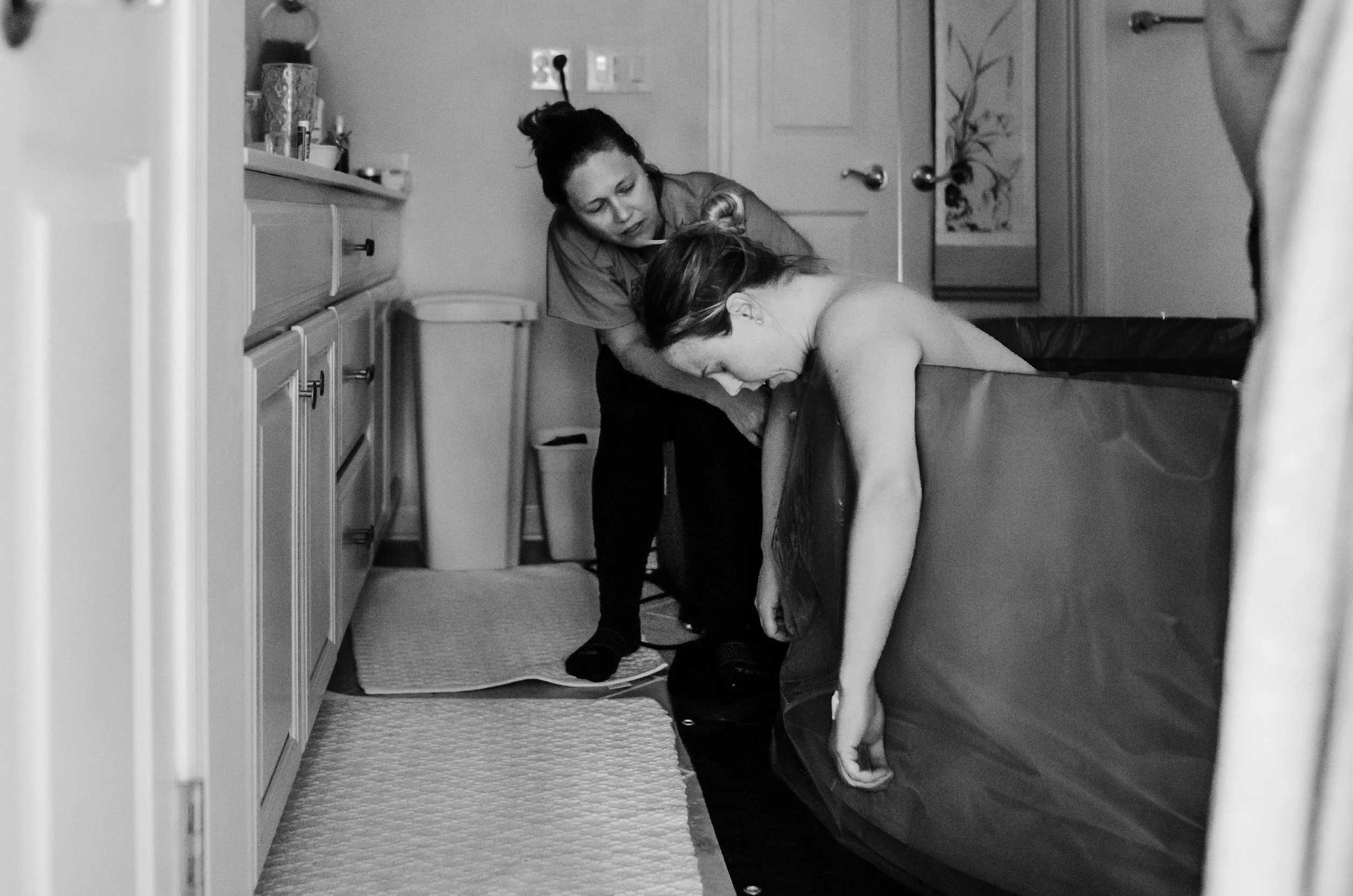

VBAC preparation is as much about planning and communication as it is about medical guidance. This final part of the series gives you actionable tools to feel confident, informed, and empowered.

Planning a VBAC (Vaginal Birth After Cesarean) is an important and empowering decision—and choosing the right provider is one of the most significant factors in having a positive experience. The truth is that not all providers or hospitals are equally supportive of VBACs. Some merely “allow” VBACs on paper but create policies or attitudes that make it difficult to birth vaginally. Others, however, view VBAC as a safe, evidence-supported option for most parents and offer genuine encouragement, education, and individualized care.
Your goal is not just to find a provider who says they’re VBAC-friendly, but one who is VBAC-supportive in practice. This guide will help you understand what that means, how to evaluate your provider’s approach, and how to create a birth team aligned with your goals.
VBAC success rates vary widely between providers—not because of patient differences, but because of differences in medical culture.
A VBAC-supportive provider:
Believes in your body’s ability to birth
Uses evidence-based guidelines
Supports physiological labor
Avoids unnecessary interventions
Honors patient autonomy
Encourages movement, position changes, and freedom in labor
Communicates openly instead of using fear-based tactics
A non-supportive provider may:
Use overly strict timelines for dilation or pushing
Limit movement or require continuous monitoring unnecessarily
Introduce fear around uterine rupture without balanced context
Push induction when it may not be appropriate
Discuss “risks” without offering statistics or alternatives
Having the right provider increases not only your chance of a successful VBAC—but also your sense of empowerment and emotional well-being.
A VBAC-supportive provider is someone who:
Numbers matter. A provider’s track record tells you more than their words.
Questions to ask:
“What percentage of your patients who plan a VBAC have one?”
“What percentage end in a repeat cesarean, and why?”
A supportive provider will answer transparently.
Current research supports VBAC as a safe option for most individuals with a previous low-transverse cesarean. A supportive provider is familiar with:
ACOG guidelines
Updated research on VBAC safety
Individualized risk assessments
If your provider relies on outdated guidelines, that’s a sign they may not be well-informed.
Spontaneous labor is associated with the highest VBAC success rates. While induction is sometimes appropriate, a supportive provider will:
Avoid unnecessary induction
Discuss pros and cons honestly
Offer alternatives like membrane sweeps or cervical ripening
They will not use induction as a policy-based convenience.
A VBAC-supportive provider honors your role in decision-making. They explain options clearly, listen to your values, and avoid coercive language.
Red flag phrases include:
“We’ll let you try for a VBAC if everything looks perfect.”
“I’ll allow you to labor, but only until X centimeters by X hours.”
“Your baby is probably too big.”
“We can schedule your repeat cesarean at your next appointment.”
Supportive care centers your choices, not the provider’s convenience.
Movement during labor supports fetal positioning and VBAC success.
A supportive provider ensures:
Access to a birth ball
Freedom to change positions
The ability to labor in water, if available
Intermittent monitoring whenever appropriate
They do not unnecessarily confine you to a bed.
Prepare these questions for your consultation or prenatal visits. Their responses will reveal much more than their VBAC “policy.”
Look for transparency and confidence.
You want individualized reasoning—not rigid rules.
Their answer should reflect nuance, not blanket refusal or blind comfort.
“Big baby” is a common scare tactic without evidence to support routine cesarean.
Their hospital or practice policies should not restrict movement without medical cause.
Some hospitals restrict VBAC entirely or require unnecessary interventions.
VBAC success rates improve dramatically with continuous labor support.
If a provider seems threatened or dismissive of doulas, they may not be aligned with evidence-based practices.
Be aware of the subtle and not-so-subtle signs that a provider may not support VBAC as enthusiastically as they claim.
“We’ll allow…”
“I don’t feel comfortable…”
“These are the rules…”
A supportive provider centers you, not themselves.
If they’re already planting seeds for a scheduled cesarean, they may not trust the VBAC process.
If they cite rupture risk but cannot provide numerical context (less than 1%), that’s a concern.
VBAC labors often progress differently, especially if scar tissue affects early dilation.
Strict dilation policies can sabotage VBAC attempts.
Requiring continuous monitoring without medical indication is outdated and not supportive of VBAC.
A VBAC-supportive doula can help you:
Prepare emotionally and physically
Understand your rights and options
Navigate conversations with providers
Stay calm and confident during labor
Access positions that support optimal fetal positioning
Reduce interventions that increase the chance of repeat cesarean
Research shows that doula support significantly improves VBAC success rates.
Many people switch providers at 28, 34, or even 38 weeks. If you don’t feel supported, you can absolutely change. Your birth experience matters, and your provider should reflect your values.
You deserve a team that believes in your ability to birth.
Finding a VBAC-supportive provider is one of the most empowering decisions you can make for your birth journey. A supportive provider respects your body, your history, your choices, and your vision for your birth. By asking the right questions, watching for red flags, and surrounding yourself with a knowledgeable team—including a doula—you give yourself the best chance for a confident, informed, and positive VBAC experience.
Your body is capable. Your voice matters. And your birth story deserves a provider who believes in your strength every step of the way. Several of our doula team are Certified VBAC Doulas and have excellent provider recommendations for you!

Join us in welcoming Olivia Norberg to Northern Virginia Birth Services. We are thrilled to have her on our team!
Introduction to birth came very early for me. I was in middle school when I started attending birth workers meetings with my mom. It was so interesting to me. When I was 15, my sister let me be a part of the home birth of her first child. It wasn’t until I had children of my own that I realized being a labor doula was something that I wanted to pursue for my career.
One thing I really enjoy about being a labor doula is encouraging families to have the confidence to advocate for what they want. Sometimes birth can be viewed as just another medical procedure. It is very satisfying to see families take back their voice and work with their doctor as a team instead of being intimidated by them.
I was almost a month shy of 19 when I gave birth to my son.
I would love to see the mindset of birth changed. Helping women witness that it’s not a passive event but an intimate and spiritual one where they do have the authority to speak up for their body, their baby and their family. I anticipate that as a doula I can help support and empower through education for women to trust their bodies and their instincts.
There is so much joy in motherhood. From the good morning smiles, unexpected hugs, chubby 3 year old arms, to slobbery kisses of a baby. The list can go on and on but for me it is most rewarding when I see the impact that my husband and I have on our children. The little moments when my son, even at 3, stands up for what he thinks is right, is kind to his brother, holds the door open for ladies, or says a heartfelt prayer. Those are the moments I swell up with pure bliss because I can see that the energy and love I pour in to my children is helping to shape them in to men who can change the world, and productive members of society who will make a difference and give back. That is what I live for.
Throughout your life you will have those days where it feels like the only positive aspect about the day is everyone managed to stay alive. You will have a day where everything feels like it’s going wrong, it’s inevitable. My best advice on those days, the days when you feel like your head may explode, is before you do anything, take a deep breath, and say I love you. Those three words exhaled in the place of an explosion of frustration can make a world of difference. Another piece of advice I have lived by is listen to your instincts. You have a connection with your child that runs so deep. Listen to your mommy instinct even if it goes against everything everyone else is telling you. Trust your gut

Some agencies just do shared call but at NOVA Birth Services you have a primary doula who you are in contact with throughout your pregnancy and when birth begins. You also have a professional doula as a back up who you will meet to. There is no searching for local doulas last minute on list serves to attend your birth should your doula be at another birth. Which brings us to our next BEST difference.
All the doulas at NOVA Birth Services are all trained from some of the countries best doula training companies and are encouraged to keep up with continuing education to grow their knowledge to best support the families in our community. Because of diversity, we also have many additional services to offer our clients based on their needs and wishes. Some of those services included are belly binding, massage, keepsake jewelry, postpartum support groups and tons of education opportunities.
Our support is not what we think is best for you or our ideals. IT IS ABOUT YOU! We support clients no matter where they choose to birth, how they choose to birth, or how they feed their babies. We meet you where you are at and help to instill you with strength in your decisions as a parent. We aren't a birth center, or hospital so our support is unbiased and all YOUR WAY!

YES! Our safety standards are so that we guarantee 100% that the care for your placenta is your placenta. We provide the transport kit that follows World Health Organization transportation guidelines and you take it home and we come to your home to serve you during the postpartum period and to process the placenta with love, care and with the highest regard.
We come highly recommended from many providers in the area and have been serving families in our communities for many years. Look no further than the support at Northern Virginia Birth Services for your unique, your way support.
In fifth grade on career day an OBGYN brought in a placenta and I was hooked. That is the short answer. The long answer is a twisted road of wonder, amazement and pure admiration of life and the birth process.
I am the second oldest of 4 children and my sisters are 7 and 9 years younger than me. When my mother was pregnant with them I asked more questions than she did. How did all this work, babies, and breastfeeding, infant care. I changed diapers and fed babies.

I have always been my friends and colleagues “mother hen”. As if for some reason I had this knowledge of all things life related. I have worked in the business world for most of my life. Most people know me as the “dragon lady” or doer. If something needed to get done I made it happen. So when I became pregnant with my first child, you would think I had it all together. But I didn’t. I went with a few recommendations and picked an OBGYN. Then at my baby shower I received a book called “with Child” and it looked at the ideas of conception, labor, birth and parenting around the world. It seemed so comforting to me. Normal. I learned what a midwife and doula was and quickly set out to find a doula.
I had my parent over and this poor doula sat at my table and chatted with us and I hired her. A few weeks later I was in labor with my son. The doctor and I had very different opinions on how this whole thing should go so with the support of my husband and doula, rocking away in a shower with intermittent Doppler monitoring from a very patient nurse I fired my doctor and took the on call mid wife. Mid Birth.
I had an amazing birth experience and just 9 short hours after my water broke and labor started I was holding my son. My nuchal cord, compound presenting posterior son. I had no idea of how awesome this feet was until my next pregnancy. And loss and the next pregnancy and loss. It was the midwife who quickly got me into a specialist upon my 4th pregnancy to help me make this one stick. I was diagnosed with a blood clotting disorder and put on blood thinners and had lots of appointments. It was over whelming and scary.
So I hired the same doula for the birth and decided to not get upset or concerned as the doctors would want me too. The maternal fetal specialist was great and assured me he would be back from his vacation before I gave birth (I never go to term go figure) So there I was 8 days early and my water broke again and labor started. After the nurse shut my husband out of triage and questioned me on how I knew my water broke the surges slowed. Once I was reunited with my husband, I asked to get up and walk to my labor room. Text book data was quoted about movement not proving to start labor and after getting up and walking out of the room and refusing Pitocin my labor started. The kind on call doctor assured me I would want the Pitocin by 6 am (it was 12am) and that he would be back then. I thanked him and told him my baby would be here before that. At 5:32 am my baby flew out and the scared resident caught her first baby of a mom birthing on her side. My doula re assured her that is was fine and that she would be ok. I chuckled.
I kept my business career all the while supporting friends and family through births, learning more about child birth and breastfeeding. Then I was blessed to be pregnant again and decided that since I was at a hospital with Midwives I didn’t need a doula. I was going to have a water birth and it was going to be great.
Well things were different. My water did not break like the first two, The few days of prodromal labor were exhausting, frustrating and worrisome. I was so lonely. When labor finally did start I didn’t even recognize it because I was expecting it to stop. At the hospital my husband was great but not as available. He had to work with the nurses, fetch things for me and fix the shower that was dripping on my face as I lay in the tub. Then when I wanted to push (in the bed on my side-the tub was weird shaped and not working for me) He had to argue with the staff that I preferred to birth on my side. It was not a bad experience but not great. It was not what I thought it would be.
I reflected a lot about that birth. How much like an OB birth it was. I had decided that one day I would become a doula or child birth educator or maybe even Midwife. (I had been scared away from obstetrics in high school because of malpractice and it still scared me)
Fast forward another child in a new state with a new and not great provider and here I was. My personal life had changed. I was home with my own 4 children and 3 foster children. My brothers’ children. I was working at a job I did not feel fulfilled in. A few months later my brother passed away. I did not know what to make of it all. What was I doing, what great mark would I leave on this world. Was I good at what I did and did I like it. Did it fill my bucket or just provide a not so great pay check. There had to be more. At my brothers funeral one resounding message came through. He was happy with his career, with his children. His life was cut short but he lived a full life. Was I doing that? Did my children or husband like me when I came home from work? No the answer was NO.
The week after my brothers’ funeral I looked up doula training and there was a class in the town close by. I found the money and a good baby sitter and attended the class. I felt way over my head and completely comfortable all at the same time. I was then introduced to a wonderful midwifery group who needed doulas to support their families and within a few short months I had attended many births. I had so much to learn but felt so comfortable in the role. I wanted to make sure that at each birth I was completely present to my moms and their families. I was then invited by my dear high school friend to support her vaginal birth after cesarean in another state. Long story short not only did it work out great but I found out that I had a knack for this birth stuff. My husband said that “birth looked good on me”. Even on tough and not so great days I was happy.
Birth work is a continual journey. Every birth is like the first one. In my heart I am sure to keep the family first and foremost. On the days that I am tired, not interested in crawling out of bed at 2 am in the snow or rain I keep my brother in mind. Honor his life by supporting others as they bring life to this world. I am told by many of my families that I have been a great help to them. My colleagues tell me I am an example to them or their hero. Truth be told, my fellow birth workers are my motivation to keep going.
The families are grateful for the hours of massaging and squeezing hips, pressing on points and breathing right along with these powerful women; however I am the one honored for the opportunity. I am the one gaining new life, purpose and drive to continue on this path. It is the families I support and the honor in the lives lost that I decided to become a doula. It is because of them that I will continue to support women and the birth process until my last breath.

We are thrilled to have Mary Rose Burke as a birth doula here at Northern Virginia Birth Services. Please join us in welcoming her to our team!
What brought you to your profession as a doula (labor and/or postpartum)?
I first thought about becoming a birth doula when my oldest child was a baby, after the trans-formative experience of giving birth and becoming a mother myself. I read so much about pregnancy and birth during my first pregnancy, and I became fascinated with all of it. Over the last 11+ years, I've had 3 more babies, and now that they're all getting a little older and more independent, I'm so excited to bring this dream to fruition. I completed birth doula trainings with DONA in 2013 and with ProDoula in 2016. I am pursuing certification as a birth doula with ProDoula.
What is your favorite part of supporting families?
In this day and age, and especially in the DC metro area, the pace of life is so fast, and we are all so busy. I want to provide my clients with a safe space where they can feel unhurried, comfortable, and most of all, heard and understood. I want the families I work with to know that I am there for them, with unwavering support and nurturing care, as they prepare for and transition to life with their new baby.
When did you become a mother?
In September of 2004, at the age of 29.
Where are you from or where were you born?
I'm a Northern Virginia native - born and raised!
What are some of your dreams and visions for your profession?
I am thrilled to be pursuing certification as a birth doula. In the near future I plan to also certify as a childbirth educator, lactation counselor, and placenta specialist.
Do you volunteer anywhere and what do you do?
I do a lot of volunteering at my church - with the children's and women's ministries, and other general church programs. I also volunteer at my kids' school - in the classroom and at PTA events.
What is your greatest joy in mothering?
As a Mom, I love those moments of one-on-one connection with each of my children, when time seems to stand still, and we just enjoy each other's presence. I also love seeing the unique personalities of each of my kids develop and grow over time - they are each so different, and I'm so thankful I get to be their Mom!
What is the hardest thing about motherhood for you now?
Things can get a little (okay, a lot!) wild and crazy in our house, with four active kids, and a frisky Beagle thrown into the mix as well. My kids generally get along, and I know they love each other immensely, but when there are sibling squabbles, I have a hard time not feeling overwhelmed and stressed out - I don't enjoy conflict! But I'm working on staying calm in those heated moments.
What would be your best advice for a new mom?
It's okay not to have all the answers. None of us have all the answers. Just know in your heart that you were specifically chosen to be this baby's Mom. Your baby doesn't need you to be perfect; we all make mistakes. As long as you are always learning and growing, that's what matters. Trust your instincts, never be ashamed to ask for help, and give yourself a lot of grace - every day is a new day and a fresh start. I think these are good reminders for all Moms - I still have to remind myself of them pretty often!
What is something you always stand by? ( a verse, statement, slogan, etc)
"Love isn't a state of perfect caring. It is an active noun like struggle. To love someone is to strive to accept that person exactly the way he or she is, right here and now." --Fred Rogers